What Is Elastography?
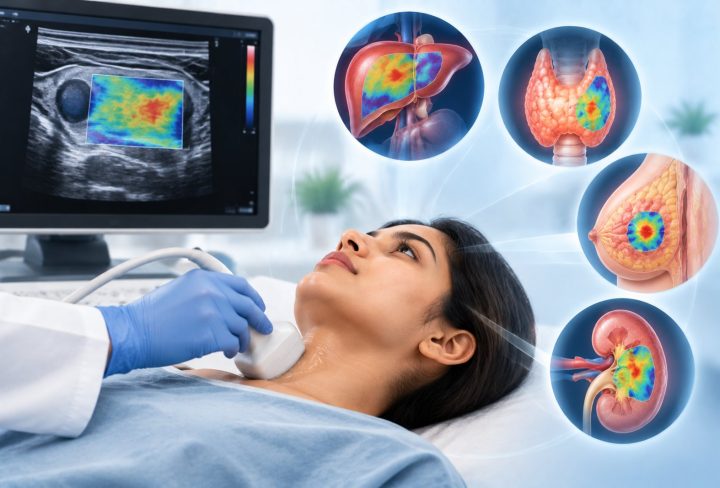
Elastography is a non-invasive imaging technique that helps doctors measure tissue stiffness. While regular imaging, like ultrasound or MRI, shows pictures of organs, elastography goes further. For example, it can help spot hard or soft areas inside the body. These changes in tissue stiffness can signal disease. Because of this, elastography is now used in many hospitals and clinics. The World Health Organization notes that early detection of disease can improve outcomes. Elastography helps make this possible by giving doctors more information than standard scans alone.
How Does Elastography Work?
Elastography uses sound waves or gentle pressure to check how stiff tissues are. First, a special machine sends waves into the body. Then, it measures how fast these waves move through tissues. Stiff tissues make the waves move faster, while soft tissues slow them down. As a result, doctors can see which areas are harder or softer. This process is painless and quick. In fact, many people say it feels just like a regular ultrasound. Because of its accuracy, elastography is now a trusted tool for tissue stiffness measurement.
Common Uses of Elastography in Medicine
Doctors use elastography for many reasons. Most often, it helps check the liver for damage or scarring. However, it is also used for other organs and tissues. For instance, it can help find:
Because elastography is safe and easy, it is used more each year. According to recent studies in medical journals, elastography can help reduce the need for biopsies in some cases.
Benefits of Elastography Compared to Traditional Imaging
Elastography offers several benefits over regular imaging methods. First, it gives extra details about tissue health. For example, it can show if a lump is hard or soft. This helps doctors decide if more tests are needed. In addition, elastography is non-invasive, so there are no cuts or needles. Here are some key elastography benefits:
Because of these advantages, many experts now recommend elastography for tissue stiffness measurement.
What to Expect During an Elastography Procedure
During elastography, you will lie down on an exam table. Next, a doctor or technician will place a small device on your skin. This device sends gentle waves into your body. You may feel light pressure, but it should not hurt. The test usually takes less than 30 minutes. Afterward, you can return to your normal activities right away. Since elastography is non-invasive, there is no recovery time needed. Many people find the test easy and stress-free.
Safety and Limitations of Elastography
Elastography is very safe for most people. Because it does not use radiation, it is safer than some other scans. However, there are a few limits. For example, very obese patients or those with lots of scar tissue may get less clear results. Sometimes, doctors may need to use other tests for a full picture. Still, most people can have elastography without problems. According to the CDC, non-invasive imaging techniques like elastography lower health risks for patients.
Latest Advances in Elastography Technology
New advances make elastography even more useful today. For instance, some machines now combine elastography with regular ultrasound for better images. Others use 3D imaging to show tissue stiffness in more detail. In addition, researchers are studying how elastography can help spot cancer earlier. Because of these improvements, doctors can now diagnose and treat diseases more quickly. As technology grows, elastography will likely play a bigger role in health care.